The medical system in DummyWar was rebuilt from scratch in a recent update, and it is now one of the systems that decides whether a squad wins. A wounded soldier who is patched up is a soldier who comes back; a wounded soldier who is left in the open is a casualty you will never see again.
What the AI does on its own
Bots treat themselves as soon as it is safe to do it. They apply tourniquets, bandage their wounds and inject painkillers. A soldier who is seriously hurt calls for a medic and waits for one instead of pushing on into a firefight he cannot win. That single behaviour is why a bot squad can hold ground far longer than its numbers suggest.
Healing yourself
Three hotkeys handle your own injuries, and they cover the three states a wound can be in:
- 4 — bandage your worst wound.
- 5 — painkiller, so you can keep moving while hurt.
- 6 — call a medic when you cannot fix it yourself.
Bandaging first is the habit worth building. A painkiller buys you time but does not stop the bleeding, and a soldier who keeps running on painkillers alone tends to collapse at the worst possible moment.
Playing the medic
The medic is a full role rather than a button. Stand next to a wounded soldier and press E to open the treatment screen. It shows a monitor with an ECG line, blood pressure and other vitals, a body diagram marking the injuries, and hints about what to do next.
Treatment is hands-on. You drag the tools out of the medical bag and perform the actions with the mouse:
- wrap a bandage around the wound;
- tighten a tourniquet;
- apply a splint;
- hook up an IV.
Once applied, the dressings stay visible on the body. A soldier you have treated looks like a soldier you have treated, and you can see the state of a casualty across the field.
Dragging a casualty into cover
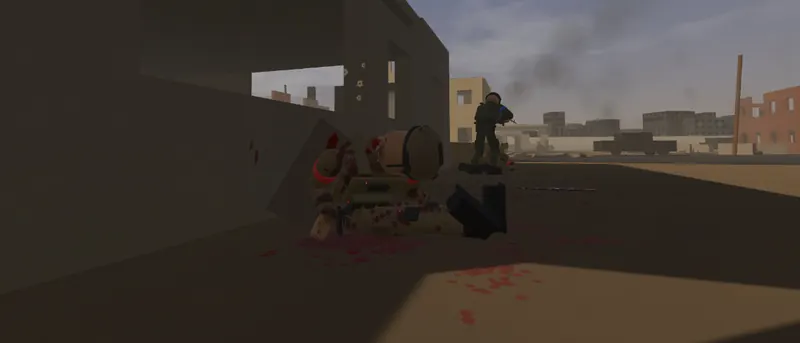
Press H next to a wounded soldier to drag him into cover. This is the smallest action in the game with the largest effect: a body lying in the open will be finished, while a body behind a wall will usually still be alive when the firefight moves on. Bots use cover for exactly the same reason, and they have been doing it before you arrived.
Why a medic changes the numbers
Consider two squads of four. In one, a soldier takes a hit, lies in the road and is gone. In the other, a soldier takes a hit, gets dragged behind a wall and gets bandaged, and returns to the fight a minute later. The second squad has not gained a soldier — it has simply stopped losing one. Over a long battle on a big map, that is the whole game.
Medic bots behave the same way: they move to the wounded, ask for covering fire, drag casualties into cover and treat them step by step. Which means a player running a medic alongside them is not duplicating work — it is covering the cases where the AI medic cannot reach in time.